History of the Andrews-Marble Schools
Early Education in the Andrews-Marble Area (1880s-1906)
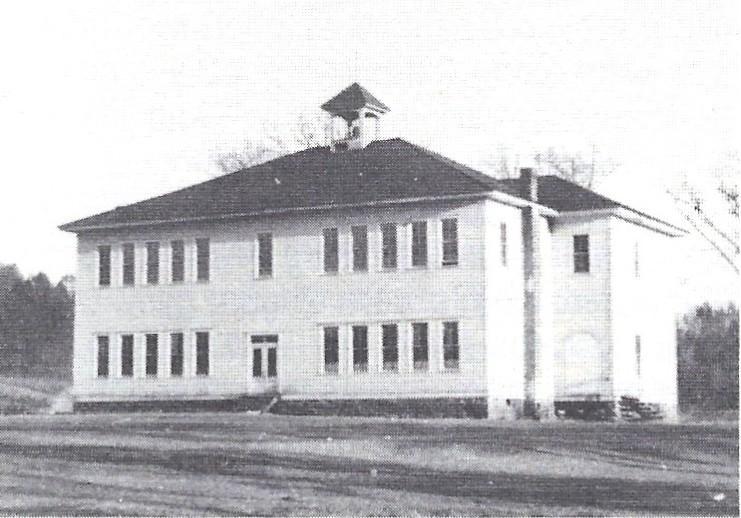
According to the best recollections available, the earliest school for the Andrews district was in what is now the Fairview area. This was around the early 1880s, with the first teacher being Mr. Bob Mooney of Murphy. Students at early schools recalled sitting on split logs. The school later moved to the area of Valley River Baptist Church and was taught by Mrs. Clara Mauney Sherrill.1
Moss School was the name of the first Marble School. It was located about a mile east of Marble, built on land donated by Henry Moss. The school was an elementary and high. Many residents of Andrews attended the Moss School until the high school moved to Andrews when the Marble School pictured above opened.2 A special school tax was voted on at Marble in 1890. Other schools in the Andrews area moved around, including to Valleytown Cemetery.3
Incorporation of Andrews High School (1893)
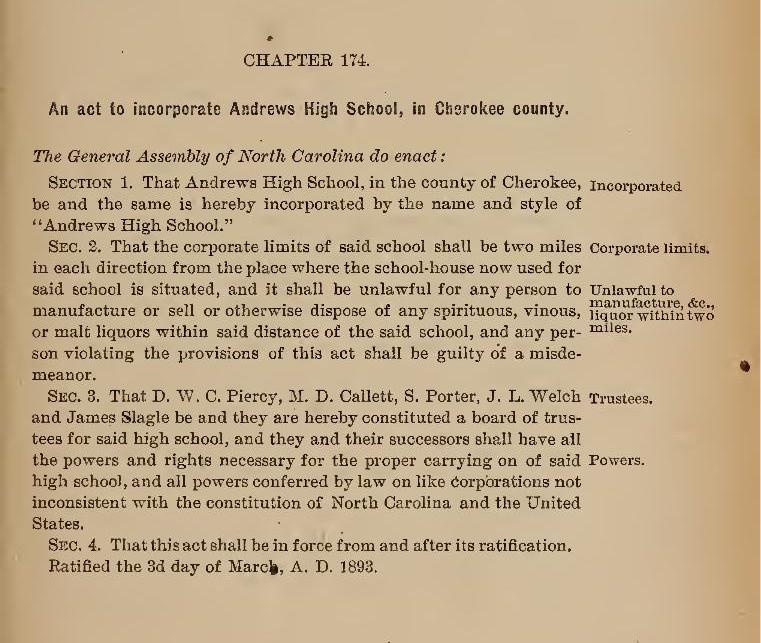
Andrews High School was incorporated on March 3, 1893, by the North Carolina General Assembly. The act would establish corporate limits of two miles around the high school, and that any manufacture or distribution of liquor would be outlawed, and that anyone violating this law would be guilty of a misdemeanor.4 Soon after, in 1895, a new two-story school building was erected in the Fairview area of town. The second floor of this building doubled as the Masonic Lodge. The first teachers were Jim (James) Lovingood and Otis Jenkins.5 The two mentioned also served as the first principals of Andrews High School. Andrews High School originally began as a private school and remained so until 1906.
First Public School (1906-1915)
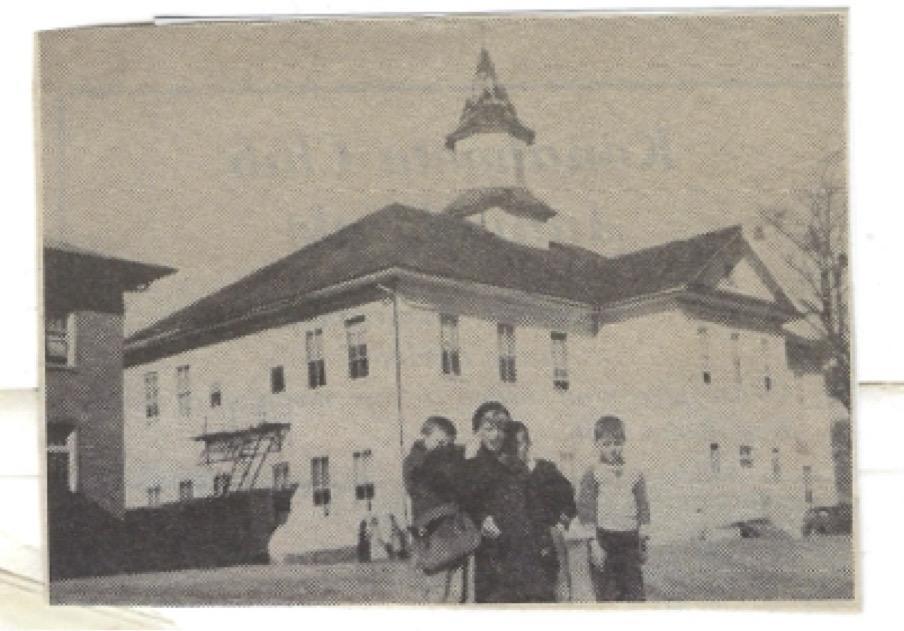
On October 27, 1906, over a year after the incorporation of the town of Andrews, a school was dedicated on top of what is known today as School House Hill. This building, known as the "Old White Building," was the first consolidated public school building for the Andrews area. It was built by Squire John Leach and John Dobson. Classes for the new school began in August 1907. This school building was demolished in 1961.
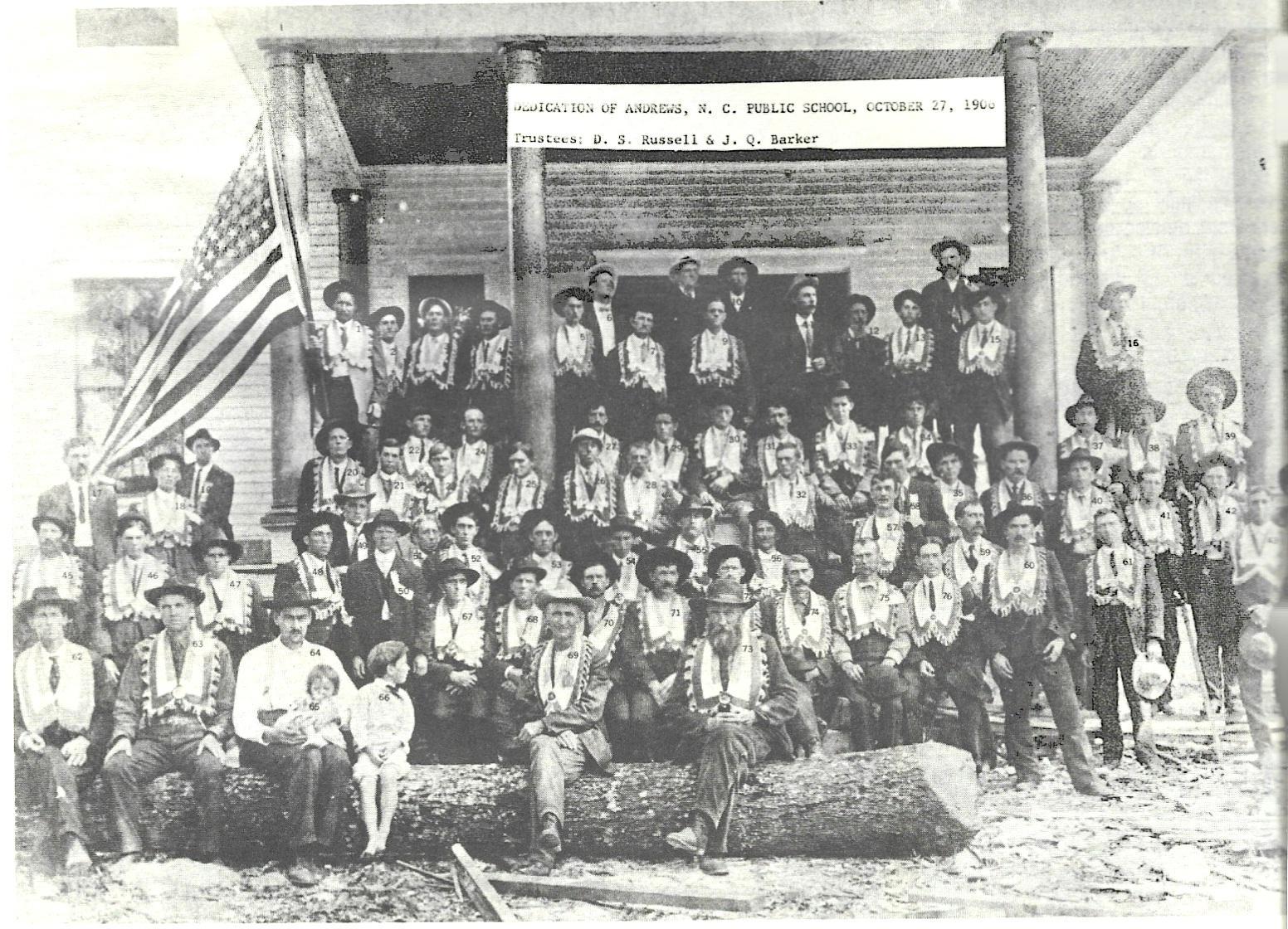
The photo above show 76 individuals numbered from 1-76. The following is that list:
Second High School (1915-1962)
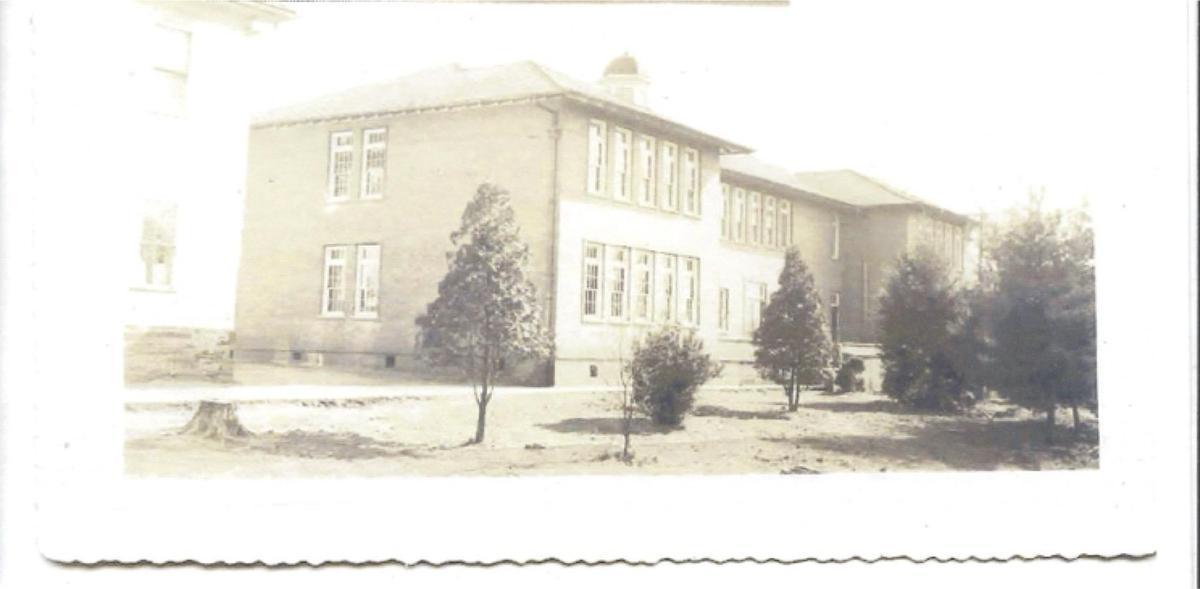
The next Andrews High School building was built in 1915. The facility was a two-story brick building that had an auditorium and various classrooms. There was no lunchroom, however, as most schools at the time did not have a lunchroom built into their school facility. The lunchroom was at a separate location.
Burning of Andrews High School & Aftermath (1962)
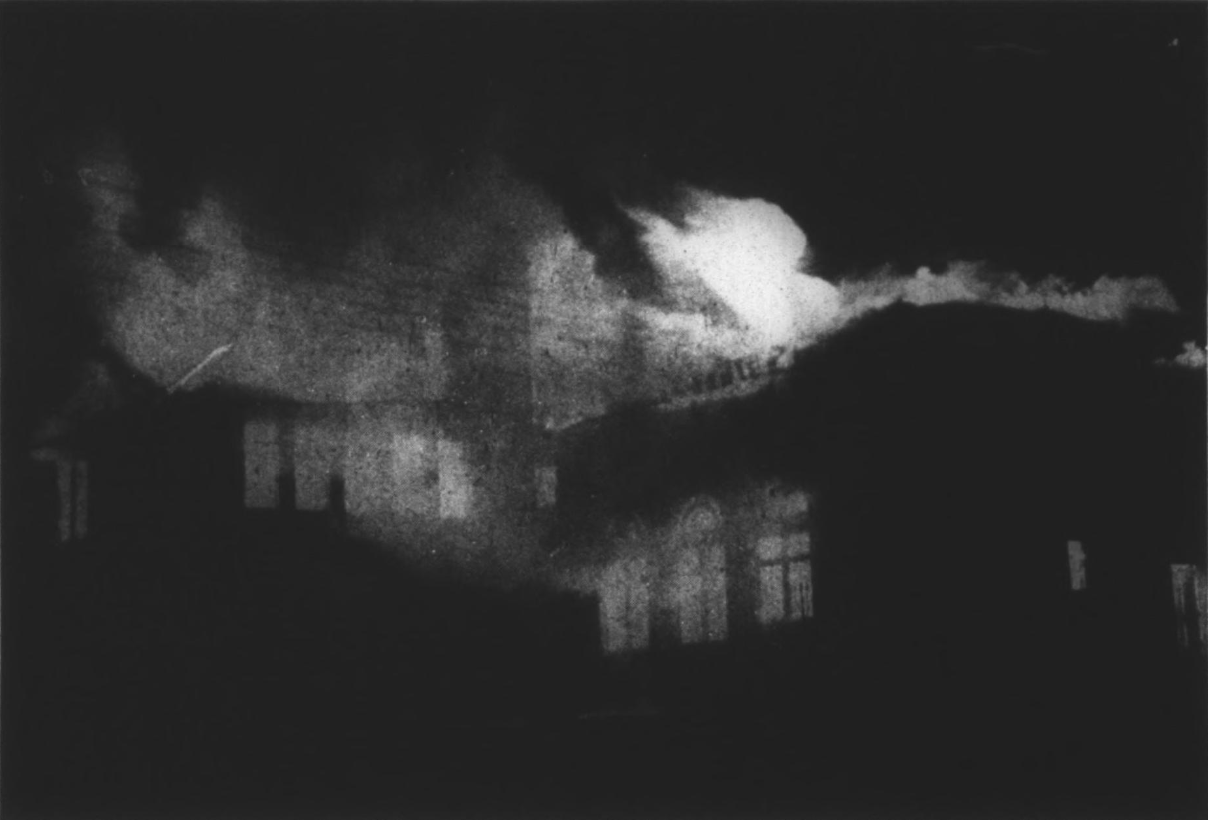
On Feb. 20, 1962, at around 4 AM, the two-story brick school building was destroyed by fire. The first call came about 3:45 AM from a resident on Happy Top. Murphy's Fire Department was called soon after 4. Superintendent Charles O. Frazier arrived around 4:15, at which time the flames were eating through the roof. The fire was believed to have started near the teachers' lounge in a part of the building where a fuse box was located. The flames were visible for miles and even gave the impression of the sun rising to a Cherokee Scout photographer. Current student records, books, and supplies were burned. Six brand-new electric typewriters and 21 standard typewriters were saved from the fire by basketball coach and business teacher Cecil Mashburn and members of the Andrews Fire Department. Those electric typewriters cost $400 each (about $4,300 today).
After a brief two days off from school, classes resumed on Thursday, February 22. Classes were held in the fellowship hall of the Methodist Church and at the First Baptist Church (now the Cultural Arts Center). Bells were installed in the two buildings. Berkshire Knitting Mills (located at what is now IOI) made desks and other school materials and offered up free labor for the setting up of temporary classrooms. The Andrews City School Board voted to start a reconstruction program as soon as possible. The 1906 building was torn down the year prior for proposed new construction (that never came to be).6 The old school bell is located by the flagpole at Andrews Elementary.
Andrews City School District (1905-1969)
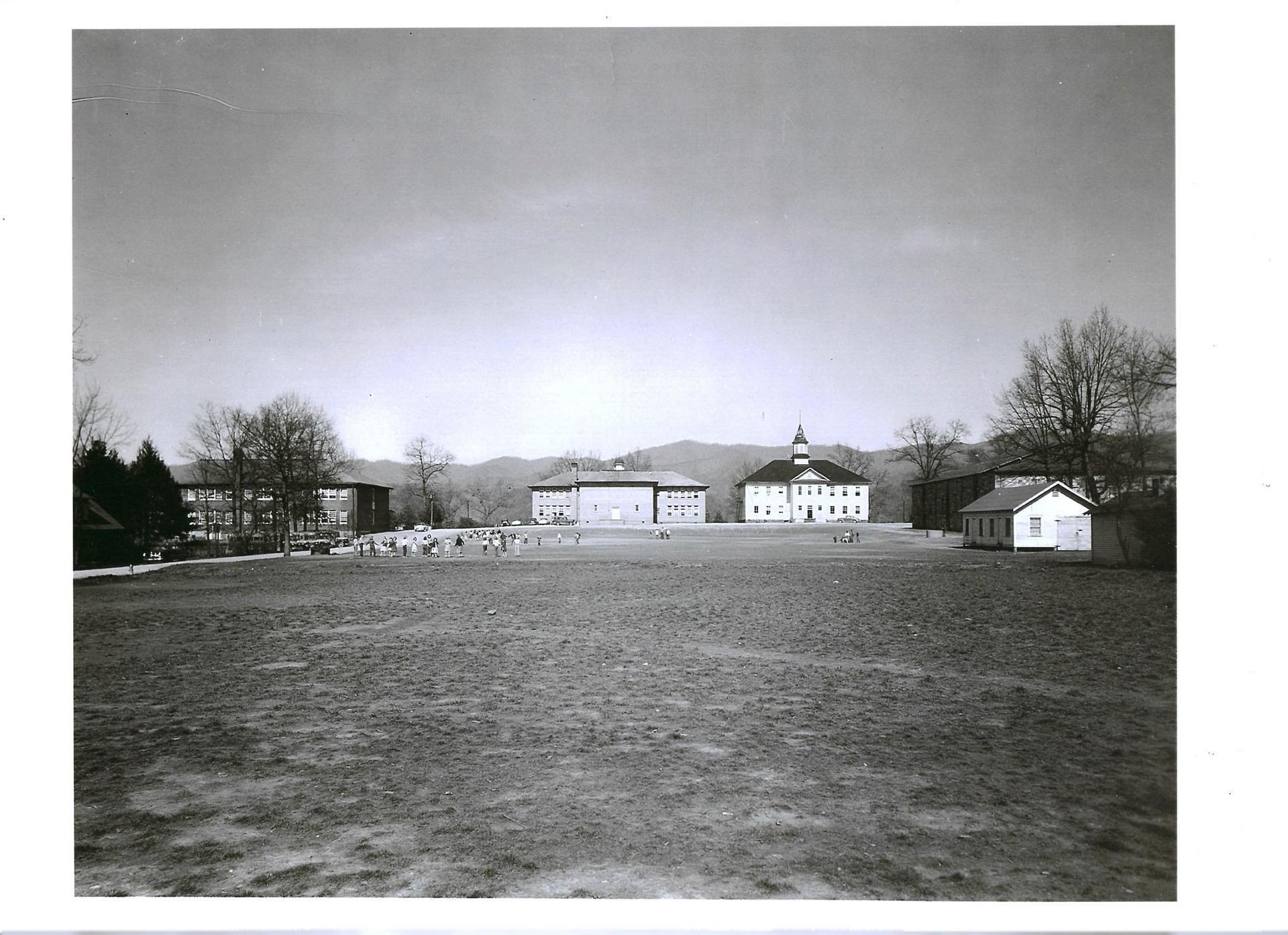
Four days after the incorporation of the Town of Andrews in 1905, the Andrews School District, Number Four, was incorporated.7 The district would later be known as the Andrews City Administrative Unit, otherwise known as Andrews City Schools. This school district covered the entire Valleytown area. The schools included were the Andrews Elementary and High School, the elementary school for black children known as the Andrews Negro School at Happy Top, and the Marble Elementary School. The first addition to the Andrews School Unit was the second high school building in 1915.
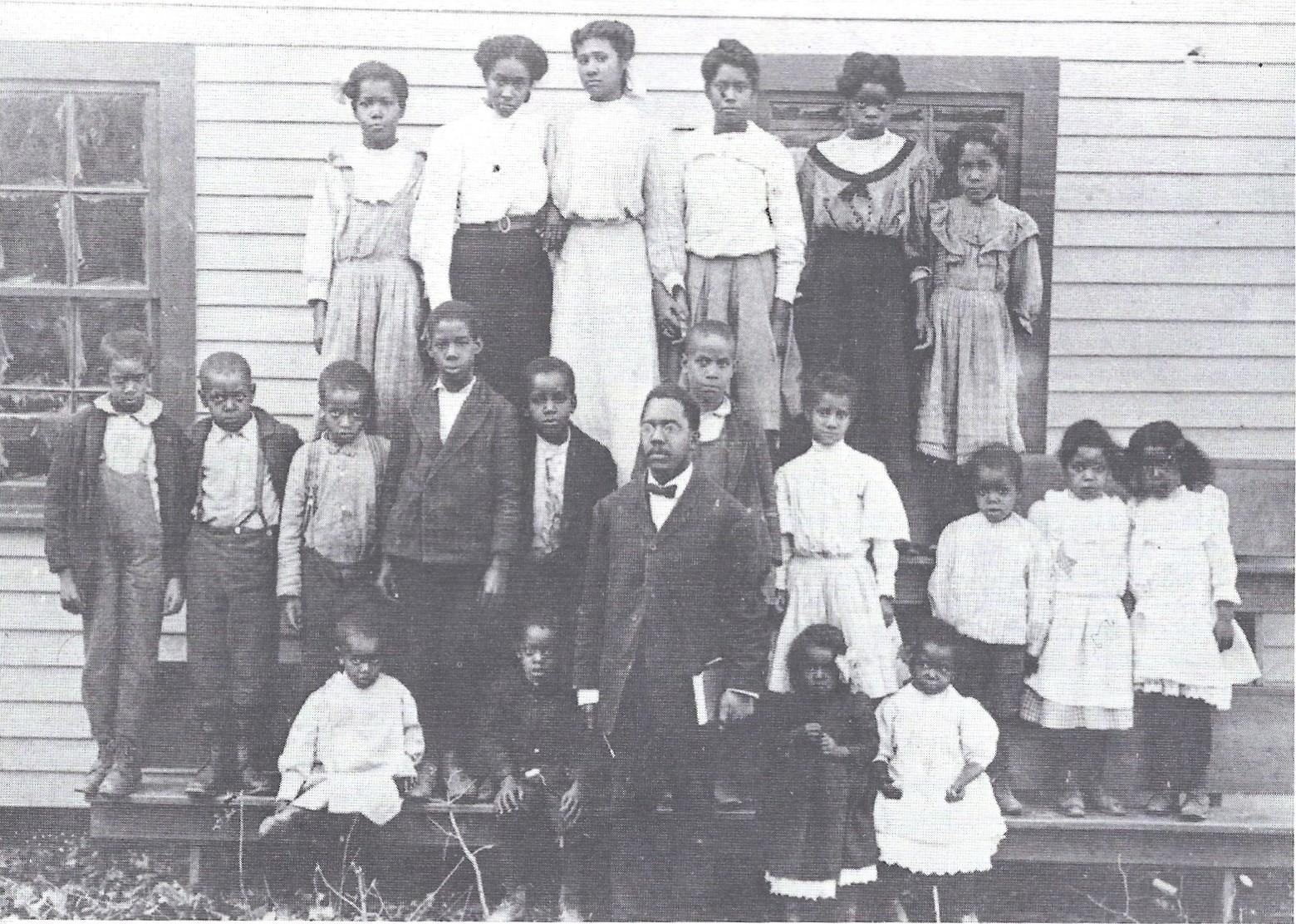
There is limited information on the elementary school at Happy Top. Unfortunately, the school was only an elementary school. A black student wanting to attend high school would have to enroll at the Asheville City School District, over two hours away.
The next addition to the school district happened in 1925, when the Andrews Elementary School (later Grammar School) was built. This two-story structure contained 12 classrooms. Two more additions to the district came in 1934 when the Old Rock Gym was built at Andrews, as well as a lunchroom.
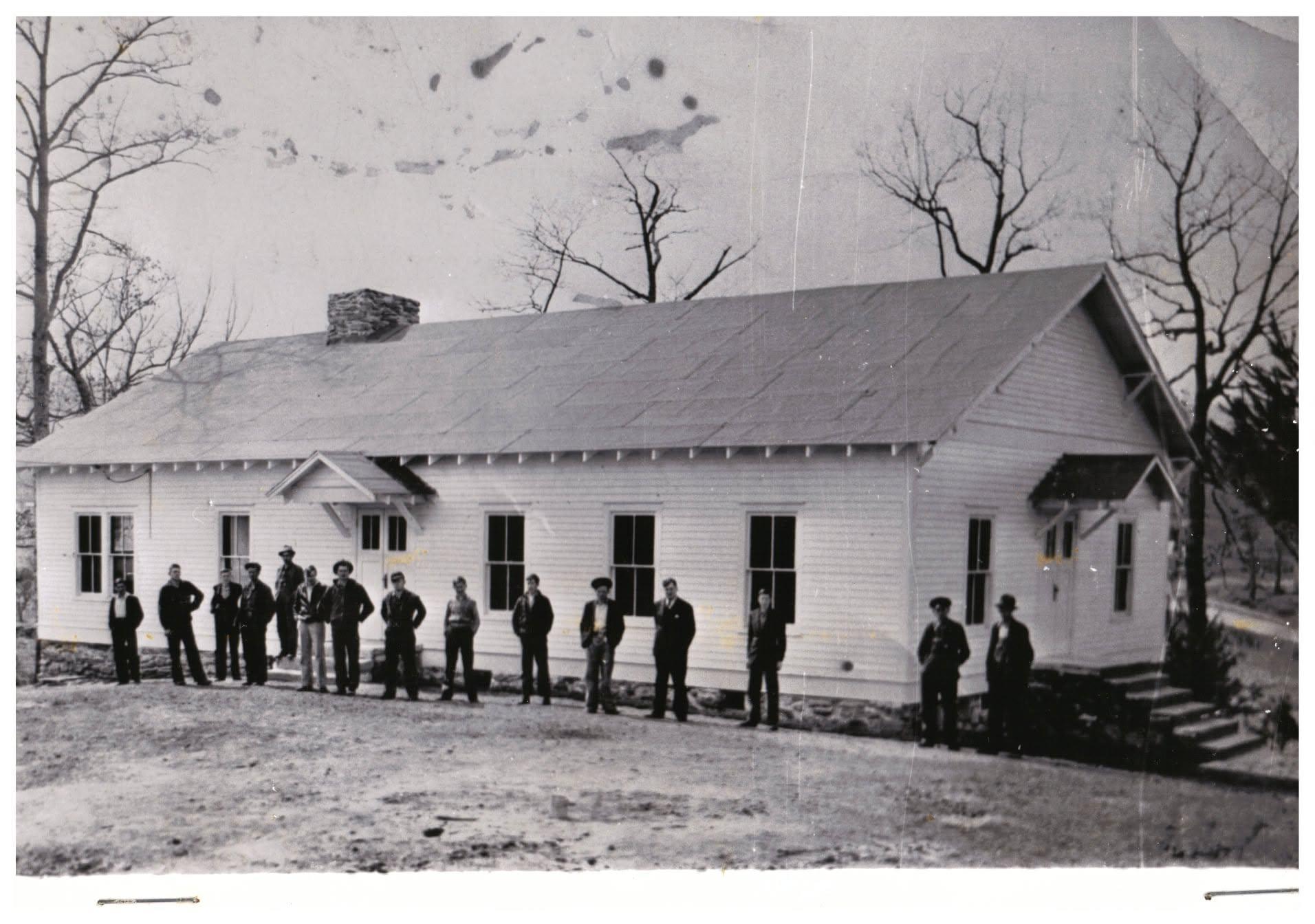
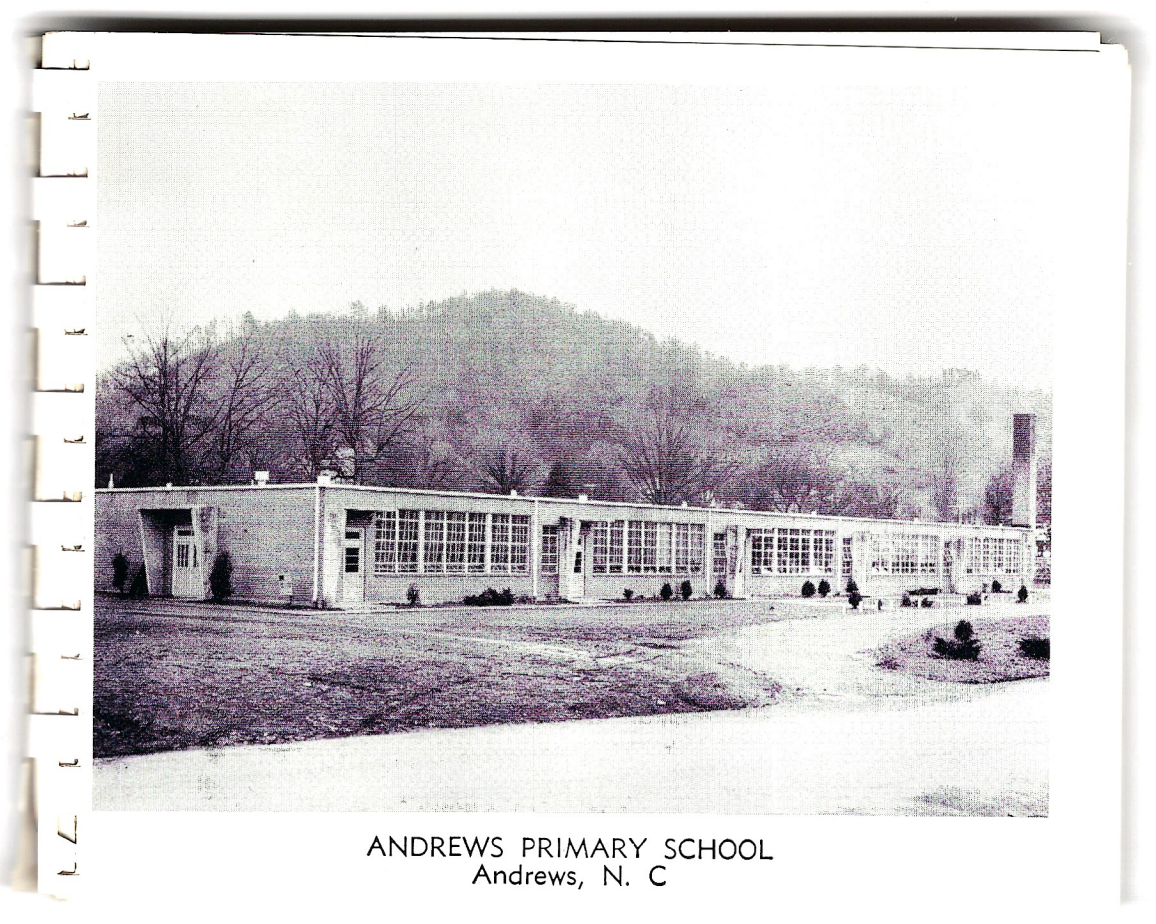
The next expansion to the campus was in 1952 when the Andrews Primary School was built. The primary school building featured nine classrooms with exterior doors, each with its own restroom. Each room was painted with pastel colors. There were also offices and a boiler room in the building. For its time, the primary school was a very modern building.
Enrollment at Andrews High School was skyrocketing in the 1950s. Improvements were also made to several of the school buildings. In 1953, enrollment was so large that superintendent J.E. Rufty had to move his office from the high school building to the Old White Building, which was beginning to see less use. The primary school vacated part of the Old White Building because the first grade used the building.8
The white building at 205 Chestnut Street was built in 1954. It was used as a vocational building for the high school. It is a two-story building. On the first floor, there were two offices, a classroom, a home ec room, and a restroom. On the ground floor, there was a shop, a supply room, and a toilet and locker room. The building was also home to the FFA and FHA (now FCCLA) chapters, which no longer exist.
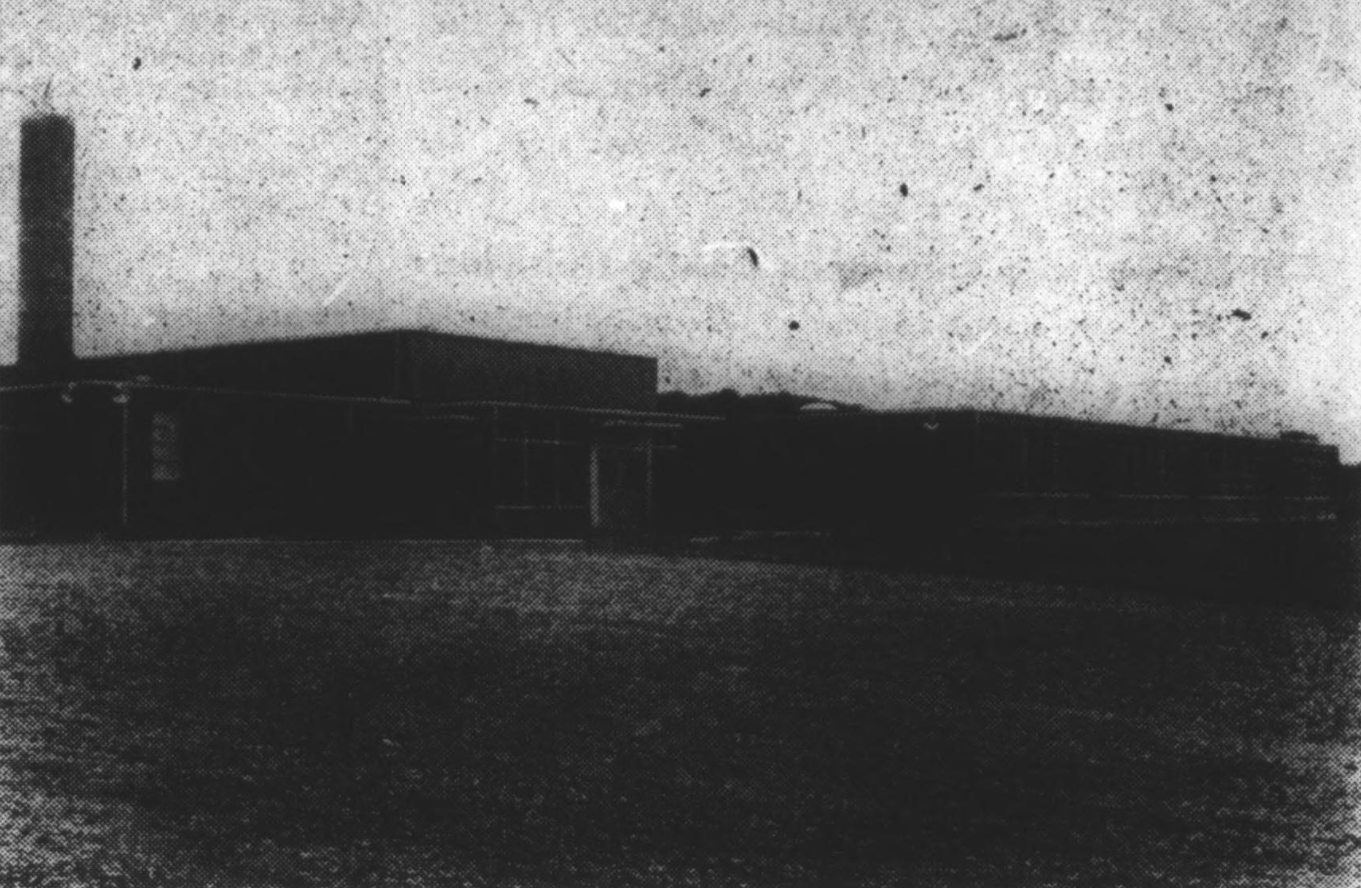
Marble Elementary was at the top of the Andrews School Unit's expenditures. School bonds were urgent for the construction of a new Marble school, as the facility that was being used at the time was inadequate. A new school facility was voted on by the Andrews Board of Education, and plans were underway as early as 1952. Construction began in 1955. The new Marble Elementary School was completed in 1956. It featured some 6 classrooms, a cafetorium, and other things that were needed for the Marble school. The school was dedicated on October 14, 1956.9
Plans were being discussed for a new high school building in 1960. The plan would have been to build a new high school within the next 2-3 years. Facility issues were noted by a grand jury for the Cherokee County Superior Court in April 1961. The grand jury ruled that the Andrews Negro School needed a new building, citing that roof leaks were the largest discrepancy. The school cafeteria was ruled too small and needed floor repairs, and the Old Rock Gym needed a roof repair on one side. At Marble, several issues needed repair, including locks, light fixtures and switches, roofing and windows, and sewer. Overall, however, the building was found to be in good condition.10 That summer, the Old White Building was razed to make way for new construction that would ultimately never happen.
On July 1, 1965, the Andrews Negro School closed. Superintendent Charles O. Frazier announced the closure in August. This complied with the Civil Rights Act of 1964. All students of the school were transferred to Andrews Elementary and assigned to classes "without regard for race, color, creed, or national origin" for the 1965-1966 school year.11
In late 1967, Andrews City, Murphy City, and the Cherokee County School Units voted on long-range plans that consisted of:
- Construction of six to eight classrooms for Murphy City Schools.
- Construction of six to eight classrooms for Andrews City Schools.
- Construction of six classrooms for Martins Creek School in Cherokee County Schools.
- Planning of a site for a central office for a consolidated Cherokee County School District.
- Merger of the three units to make a consolidated Cherokee County Schools.
The details surrounding the merger also included moving the central office for Cherokee County Schools out of the county courthouse. It was also determined that it would be inappropriate for the central office for the consolidated CCS to be at Murphy High School. For Andrews City Schools, the superintendent's office who was also the principal of Andrews High School, located inside Andrews High School, would become the principal's office, diminishing the administrative power of the principal to just the high school. The addition for Andrews City would house the seventh and eighth grades, with the plan also to phase out the 1925 Grammar School building. Other details of the merger were to be discussed with the board of commissioners.12
Murphy City Schools covered the Murphy Elementary and High School campuses, while Cherokee County Schools covered the Hiwassee Dam Union (ES and HS) School, Martins Creek Elementary School, Peachtree Elementary School, Ranger Elementary School, Unaka Elementary School, and the White Church (Hanging Dog) Elementary School.
On March 21, 1969, the plan to merge the two districts was adopted. All boards had to agree for the merger to take place. Nearly all the citizens attending the meeting approved. There was concern that the Andrews board would not agree, but F.E. Blalock of the Andrews School Board assured the Cherokee Scout that the board certainly agreed. The plan also included that the members of the new board be elected on a non-partisan basis and that local school committees only act in an advisory capacity. The State Statute stated that the county board could delegate authority to local school committees, but that was objected to by citizens. It was agreed by the boards, however, that the local committees were needed but would have absolutely no authoritative power and should only act in an advisory capacity.12
The merger was approved by the state board of education on May 1, and on July 1, 1969, the Andrews and Murphy districts dissolved and merged with Cherokee County Schools. The Andrews City Board of Education was eliminated as a whole, while the Murphy board became an advisory committee. The last superintendent of the Andrews School Unit was C. Landrum Wilson, who had only been superintendent for the 1968-1969 school year. Cherokee County Schools' superintendent Lloyd Hendrix retired after 30 years of service that same day. The new superintendent of the new Cherokee County Schools was Murphy superintendent John Jordan.14 The first principal of Andrews High School (as a public school) was Mack D. Jones.
Current High School (1963-Today)
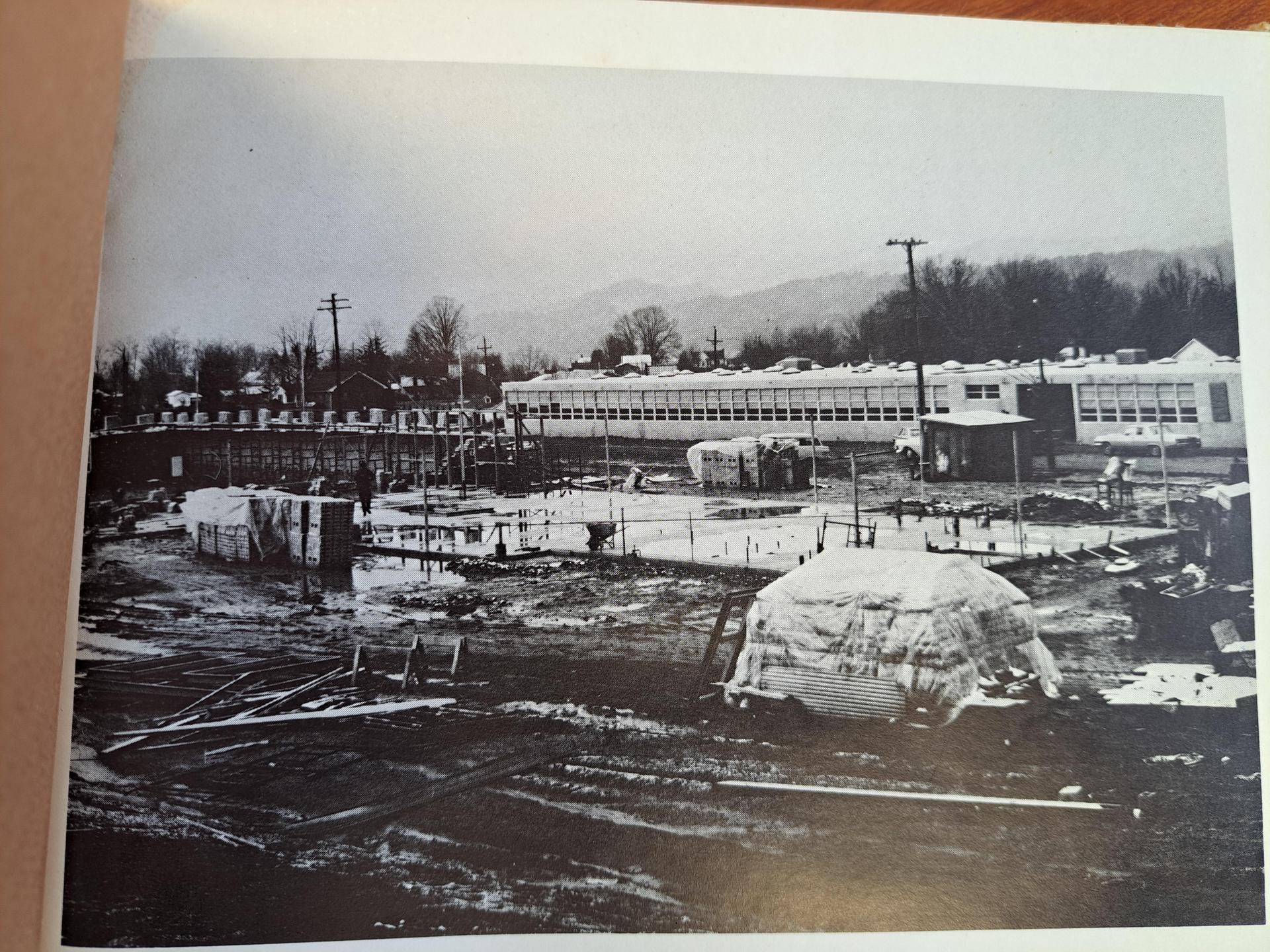
After the burning of the school, plans were made to build a new facility. Designed by Chivous Gilmer Harrill, who also designed Murphy High in 1956, a new 25,000 square foot facility was built in the spring of 1963, and a second wing of 23,000 square feet, the cafeteria/gym building, was opened later that year. The new campus contained various classrooms, offices, and a stage where the weight room is today. Windows in the main building spanned from wall to wall, with skylights also helping with additional light.
The past two years have been a period of transition at Andrews High School. We have experienced the loss of a building by fire, a year of relative hardship and inconvenience in temporary facilities, and the slow process of rebuilding a new school plant on a new site.
The acquisition of new physical facilities has brought a new pride and a fresh educational outlook on the part of both faculty and students. We have accepted change with a cooperative and sympathetic spirit. Many of us have eagerly sought new methods and approaches toward quality and excellence in our school program. It must be a continuing effort for all of us.
We look back with pride on past achievements. We look forward with confidence toward further improvements and greater accomplishments at Andrews High School.
—Charles O. Frazier
The acquisition of new physical facilities has brought a new pride and a fresh educational outlook on the part of both faculty and students. We have accepted change with a cooperative and sympathetic spirit. Many of us have eagerly sought new methods and approaches toward quality and excellence in our school program. It must be a continuing effort for all of us.
We look back with pride on past achievements. We look forward with confidence toward further improvements and greater accomplishments at Andrews High School.
—Charles O. Frazier
Andrews City Schools Superintendent (1959-1967)
The Wildcat 1964
In 1970, the Andrews Junior High building, now Building B, was built. This was a smaller building to house the 7th-8th grades (as mentioned in the long-range plan from the Andrews City Unit). In 1973, the band program was founded. The Hugh Hamilton Stadium was built around 1976. In 1977, the girls' varsity basketball team won the state in 1A.
Around 1978, the enrollment at Andrews Senior and Junior High was about 600, and the enrollment at the nearby elementary school was about 800, totaling about 1400. Andrews had a percentage of 64% of graduates who moved into higher education, compared to the state average of that time of 30%. 98.6% of that 64% received scholarships or financial aid through the efforts of student counselors. In 1978, Andrews was number 3 in the state of North Carolina in scholarship money awarded. Andrews was the top school in North Carolina for placement in summer jobs in 1979. Andrews had up to 8 sports around 1979, which was very high for the usual 2 or 3 sports for a school of its size. Band, art, and chorus were offered at Andrews High School, which was not usually found in schools with small enrollments. Band and art are still offered as electives today. An on-campus master's program was offered at Andrews with the help of Western Carolina University.15
In 1985, the Band & Art Building was constructed to the northwest of the school. This was part of a project to build Cultural Arts buildings at Andrews, Murphy, and Hiwassee Dam High Schools.16 In 1987, the shop building was constructed next to the Band & Art building. The Kenneth Moore Track was constructed at AHS in the Hugh Hamilton Stadium in 1990.
In 1992, Andrews High was renovated. Renovations included changing windows in the three main buildings, new entrance doors to each building, and new bleachers in the gym.
Cherokee County Schools launched their website http://www.grove.net/~coffice/ around 1997/1998. The site later became http://www.cherokee.k12.nc.us around 2000. This featured all the schools' webpages. Our site was http://www.grove.net/~coffice/AHS.html. Andrews High operated as a junior and senior high school until 1996, when Andrews Junior High was renamed Andrews Middle.
In 2004, Andrews High was once again renovated. The most notable were the exterior changes, as a new roof was built on the main building (Building A), with a gable roof, instead of the previous flat roof, giving the building a taller look. Removal of the skylights in each building occurred. The gymnasium is now the only part of the school with skylights. The ceilings in all the classrooms were lowered.
In 2011, the former Junior High School/Middle School building, Building B, was expanded on the west side and the northern part of the building. On the north side, a large new choral room with two offices was added. The west side of the building also saw the addition of restrooms. On January 15, 2016, the school gymnasium was dedicated as the Ken Solesbee Athletic Center, in honor of coach Kenneth Solesbee, a prominent figure in Andrews' athletic history. The dedication also included naming the court the Ken Solesbee Court, refurbishing the bleachers, and repainting the entrance to the center.
Andrews-Marble Schools After Andrews City Schools (1969-Present)
After the merger of the three school districts, all projects for the Andrews and Marble Schools were to be executed by the Cherokee County Board of Education. The first was the Junior High project at the high school.
On January 19, 1971, the 1925 two-story brick elementary school burned. A school bond election occurred that year, which ramped up the efforts to build a new elementary facility. Architect Eric Townson designed an extension on the 1952 Andrews Primary wing. The new wing was built in 1973 and contained multiple classrooms, a library, and a new modern cafeteria.
Kindergarten Centers were being built at some of the Cherokee County schools in 1976. At Marble, a small building was erected for kindergarten students. In 1977, the octagonal Pre-K/Kindergarten building was erected at Andrews Elementary.
In 1992, the Andrews Elementary campus was renovated. This renovation included drop ceilings and window changes in the 1952 wing, with new windows and aluminum infill panels. The doorway at the south end of the primary wing was redone. The exterior doorways that were in each of the primary wing classrooms were blocked off. On the exterior, the doors were blocked by concrete that would form a wall adjoining the existing concrete canopy. Inside, the doors were blocked by baseboards and large bulletin boards. The 1973 wing remained virtually unchanged.
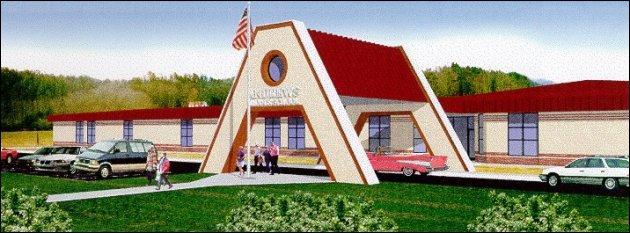
Cherokee County Schools set a $25 million project that had four schools built, plus two additions and renovations. Andrews was to have a new middle school facility. The site would be located on land donated by the H.D. Lee Company and was officially quitclaimed and transferred to CCS in March 1998. Andrews Middle School was previously established in 1996 as the successor to the Andrews Junior High. However, that school only housed the seventh and eighth grades. This new facility would house the traditional sixth, seventh, and eighth grades. The school officially opened on August 9th, 1999.
In 1999, the Old Rock Gym was razed due to poor building conditions. This left Andrews Elementary without a gymnasium. In 2003, a new gymnasium attached to the west side of the 1973 wing was erected. This new addition also included a stage, ticket and concession office, and additional restrooms, as well as a PE office, storage, and an athletic trainer's room. This addition, however, closed off Walnut Street (later Jean Christy Avenue) that would have gone through the west side of the campus. At the north end, the street became a turn onto Fourth Street. On the south end, the street became a loop with a parking lot. The old high school bell was left untouched.
Closure of Marble Elementary School and Aftermath (2017)
On June 8, 2017, the Cherokee County Board of Education voted 4 to 2 to close Marble Elementary. This was due to the financial burden that was put on Cherokee County Schools, caused by declining enrollment at Marble. According to a feasibility study, Marble lost over 300 students in enrollment during the time period of 2008-2017. This closure was a very controversial decision, due to the Marble community's feelings for the school.
As a result of this closure, all the staff at Marble were transferred to other schools, mainly to the Andrews schools. Students attending Marble were also transferred to Andrews Elementary, bringing on an anticipated overflow. This caused the fifth grade at Andrews Elementary to move to Andrews Middle. This effect was also looked down upon. Andrews Middle, however, did not overflow, continuing to remain under capacity. The fifth grade would eventually move back to Andrews Elementary for the 2021-2022 school year.
Marble Elementary's building became The Oaks Academy, the successor to the Mountain Youth School that was located at the old Martins Creek School. The Oaks Academy is an alternative school and was located on the Marble campus until 2023. After The Oaks moved, the Marble campus sat empty and was eventually put up for sale.
In May 2024, the Cherokee County Board of Commissioners notified Cherokee County Schools that they were being evicted from their central office building at 911 Andrews Road. CCS moved to the Marble campus, and now the Marble school is serving its third role as the Cherokee County Schools Central Office, at 2230 Airport Road.
Legacy
The schools of Andrews and Marble have left an impact on their communities. From its beginnings in the late 19th century to its advanced education in the 21st century, the Andrews-Marble schools will leave a legacy. Marble has already left its legacy, having been closed for nearly 10 years. Andrews High and the other schools will continue to serve the residents of the Valleytown township, and continue to have students learn and enjoy their experience in school. We have a great student body that will do great things, and we're glad to be a part of their journey.
| Principals (1890-1906) |
|---|
| James Lovingood (circa 1892) |
| Otis C. Huskins (circa 1899) |
| Superintendents of Andrews City Schools (1906-1969) |
| John H. Harwood (1906-1911) |
| Herbert Peele (1911-1917) |
| M.T. Edgerton (1917-1921) |
| F.C. Nye (1921-1925/26) |
| J.G. Allen (1925/26-1927) |
| A.B. Combs (1927-1929) |
| C.W.E. Pittman (1929-1932) |
| J.J. Stone (1932-1934) |
| A.B. Combs (1934-1935) |
| Isham Barney Hudson (1935-1951) |
| John E. Rufty (1951-1959) |
| Charles Oldridge Frazier (1959-1967) |
| Fred W. Rogers (1967-1968) |
| C. Landrum Wilson (1968-1969) |
| Principals (1969-Present) |
| Mack D. Jones (1969-1971) |
| William Roy Pipes (1971-1976) |
| Maynard Brown (1976-1981) |
| William Roy Pipes (1982-1983) |
| Joseph C. Morrow (1983-1988) |
| Stephen Timothy Coffey (1988-1997) |
| Mike Rogers (1997-2004) |
| Olin O'Barr (2004-2006) |
| Stephen Timothy Coffey (2006-2008) |
| Floyd A. Lowman (2008-2009) |
| Virginia C. Haynes (2009-2015) |
| Dr. Lisa Anderson Fletcher (2015-2021) |
| Lance Bristol (2021-2024) |
| Dr. Sheryl Rogers (2024-10/2025) |
| Ruby Cutshaw & Thomas Graham (10/2025 Interims) |
| Dorin Oxender (10/2025-Present) |
Sources:
- Aline Bristol. "Split Logs Were First Andrews School Benches" The Cherokee Scout, April 25, 1957, p.1
- Alice D. White and Nell A. White, The Heritage of Cherokee County North Carolina Vol. I (Hunter Publishing Company, 1987), 38-39
- Bristol, “Split Logs.”
- Josephus Daniels, Private Laws of the State of North Carolina passed by the General Assembly at its Session Of 1893, begun and held in the city of Raleigh on Wednesday, The Fourth Of January, A.D. 1893 (Authority of the North Carolina General Assembly, 1893), 283
- A. White and N. White, Cherokee County Heritage, 23
- Unknown Author. "Fire Destroys High School At Andrews" The Cherokee Scout And Clay County Progress, February 22, 1962, p.1
- E.M. Uzzell & Co., Private Laws of the State of North Carolina passed by the General Assembly at its Session Of 1905, begun and held in the city of Raleigh on Wednesday, The Fourth Of January, A.D. 1905 (Authority of the North Carolina General Assembly, 1905), 517-528
- Evelyn Baker. "Andrews School Off To Good Beginning" The Cherokee Scout, September 10, 1953, p.1
- Unknown Author. "New Marble Elementary School Dedication Is Set" The Cherokee Scout, October 11, 1956, p.1
- Unknown Author. "Grand Jury Recommends New Building For Andrews School" The Cherokee Scout, April 13, 1961, p.1
- Unknown Author. "School To Open Aug. 25, Faculty List Is Named" The Cherokee Scout And Clay County Progress, August 5, 1965, p.9
- Unknown Author. "School Boards Agree On Long Range Plans; 1969 Is Merger Target Date" The Cherokee Scout and Clay County Progress, December 7, 1967, p.1
- Unknown Author. "School Merger Plan Is Adopted; Elections To Be Non-Partisan" The Cherokee Scout and Clay County Progress, March 27, 1969, p.1
- Unknown Author. "County School Merger Is Effective On July 1" The Cherokee Scout and Clay County Progress, July 3, 1969, p.1
- David Williams, “Welcome to Andrews 1979,” YouTube, June 2015, 6 min., 34 sec., https://www.youtube.com/watch?v=08EyZbL8ohc&t=49s
- NC DPI Division of School Planning, Schools Of Interest 6 (North Carolina Department of Public Instruction, 1986), 37
Thank you to Kandy Barnard for providing photos 3, 5, and 7.